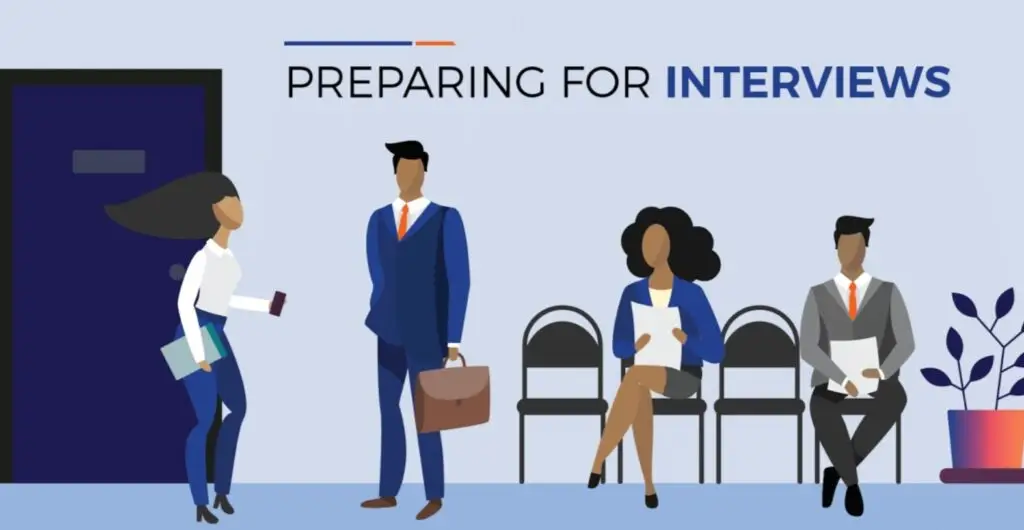
Job Interview: Preparing for a Job Interview is one of the phases of hunting for a job, which puts applicants and candidates on edge. While some might claim to have mastered the art of scaling job interviews, a larger percentage of job seekers, especially fresh graduates, get jittery when invited for interviews. The reason? They do not know how to prepare for a job interview.
Your interview preparation strategy can be the difference between impressing your interviewer and getting your CV tossed into the trash right after the interview. A job interview is a conversation between a prospective employee and employer that helps the latter make a decision on hiring the interviewee or not.
Over the years, technology has enabled organisations to conduct less of face-to-face interviews. However, regardless of what type of interview you are attending, the rules are largely similar. Your ultimate goal should be to impress and convince the employer that you are the right person for the job. Here is a list of things you need to do to ace your next interview.
How To Prepare For A Job Interview|The Complete Guide.
Below is an exhaustive, step-by-step guide on how to prepare for a job interview, covering everything from mindset to follow-up. This works for entry-level, mid-level, senior, remote, and on-site roles.
Understand the Purpose of a Job Interview
- A job interview is not just about answering questions. Employers use it to assess:
- Your skills and experience
- Your problem-solving ability
- Your communication skills
- Your attitude and cultural fit
- Your professionalism and confidence
- Whether you can add value to the organization
Your goal is to prove competence, alignment, and reliability.
ALSO READ: Canadian Job Listing Websites for Hiring Foreign Workers With Sponsorship
Research the Company Thoroughly (Non-Negotiable)
What to Research:
- Company mission, vision, and values
- Products or services
- Industry and competitors
- Company culture
- Recent news, launches, or achievements
- Job role expectations
- Where to Research
- Company website
- LinkedIn page
- Glassdoor reviews
- News articles
- Social media pages
- Why This Matters
- Helps you tailor your answers
- Shows genuine interest
- Helps you ask intelligent questions
- Prevents generic responses
Interviewers can tell when you didn’t research the company.
Understand the Job Description Line by Line
Break the job description into:
- Required skills
- Preferred skills
- Daily responsibilities
- Tools or software mentioned
- Soft skills required
- Then: Match each requirement with your experience or transferable skills
Prepare examples for each one
If a skill is missing, explain how you’re learning or compensating for it.
Prepare Answers to Common Interview Questions
A. Tell Me About Yourself
Structure:
- Who you are professionally
- Your experience
- What you’re currently doing
- Why you’re a good fit
Example format:
“I’m a [role] with X years of experience in [field]. I’ve worked on [key achievements]. Currently, I’m focused on [current role/learning]. I’m excited about this opportunity because…”
B. Why Do You Want This Job?
Mention:
- Alignment with company values
- Growth opportunities
- How your skills add value
- Avoid: “I need a job” or “I just want experience”
C. What Are Your Strengths?
- Choose job-relevant strengths
- Back them up with examples
- Show impact
Example:
“One of my strengths is problem-solving. In my previous role, I identified an issue that reduced efficiency and implemented a solution that improved productivity by 20%.”
D. What Are Your Weaknesses?
- Choose a real but non-fatal weakness
- Show self-awareness
- Explain how you’re improving
Example:
“I used to struggle with delegating tasks, but I’ve learned to trust team members and use project management tools to improve collaboration.”
E. Behavioral Questions (STAR Method)
- Use the STAR method:
- Situation
- Task
- Action
- Result
Example questions:
Tell me about a challenge you faced
Describe a time you worked under pressure
Tell me about a conflict at work.
Prepare Questions to Ask the Interviewer
Never say “I don’t have questions.”
Ask about:
- Team structure
- Performance expectations
- Growth opportunities
- Company culture
- Next steps.
Examples:
- “What does success look like in the first 6 months?”
- “What challenges is the team currently facing?”
- “How does the company support employee development?”
📌 This shows confidence and genuine interest.
6. Practice, But Don’t Memorize
- How to Practice
- Practice aloud
- Do mock interviews
- Record yourself
- Practice with a friend
- Time your answers (1–2 minutes)
Why Not Memorize?
- Memorized answers sound robotic
- You may panic if the question changes slightly
👉 Know your points, not scripts.
7. Prepare Your Documents
Ensure you have:
- Updated CV/resume
- Cover letter (if required)
- Portfolio (for creative/technical roles)
- Certificates or references
- Notepad and pen
- For virtual interviews:
- Rename files professionally
- Keep documents easily accessible
8. Dress Appropriately For A Job Interview
- General Rule: Dress one level more professional than the company’s daily wear.
- Corporate roles: formal or business professional
- Creative/tech roles: smart casual
- Remote interviews: professional top + neat appearance
Avoid:
- Loud colors
- Distracting accessories
- Wrinkled clothes
- Poor grooming
📌 First impressions are formed in 7 seconds.
9. Prepare for Virtual Job Interview(s)
- Technical Checklist
- Stable internet
- Fully charged device
- Working camera and microphone
- Quiet environment
- Neutral background
- Proper lighting
- Positioning
- Camera at eye level
- Maintain eye contact
- Sit upright
- Test Everything Beforehand
- Video call app
- Audio quality
- Screen sharing (if required)
10. Body Language and Communication
- Positive Body Language
- Firm handshake (physical interviews)
- Smile naturally
- Sit upright
- Nod occasionally
- Maintain eye contact
Avoid:
- Fidgeting
- Crossing arms
- Looking distracted
- Speaking too fast
- Communication Tips
- Speak clearly
- Pause before answering
- Ask for clarification if needed
- Don’t interrupt
11. Time Management
- Arrive 10–15 minutes early
- Log in 5–10 minutes early for virtual interviews
- Keep answers concise
- Respect the interviewer’s time
12. Handle Difficult Questions Gracefully
If you don’t know an answer:
- Stay calm
- Be honest
- Explain your thought process
- Show willingness to learn
Example:
“I haven’t worked directly with that tool yet, but I’ve used similar ones and I’m confident I can adapt quickly.”
13. Salary and Negotiation Preparation
Before the interview:
- Research salary ranges
- Know your minimum acceptable pay
- Consider benefits, flexibility, and growth
When asked:
- Avoid giving a number too early
- Provide a range
- Emphasize value, not desperation
14. Closing the Job Interview Strongly
End with:
- Appreciation
- Reaffirm interest
- Confidence
Example:
“Thank you for the opportunity. I’m very excited about this role and confident I can contribute positively to your team.”
15. Follow-Up After the Job Interview
Within 24–48 hours:
- Send a thank-you email
- Mention something discussed
- Reiterate interest
This:
- Shows professionalism
- Keeps you memorable
- Can influence final decisions
16. Mental & Emotional Preparation
- Get enough sleep
- Eat well
- Stay hydrated
- Avoid last-minute cramming
- Stay positive
Confidence comes from preparation.
Final Job Interview Success Checklist
✔ Researched the company
✔ Understood the role
✔ Practiced key questions
✔ Prepared documents
✔ Dressed appropriately
✔ Asked intelligent questions
✔ Followed up professionally
Conclusion
Job interview success depends on thorough preparation, confidence, and clear communication. By researching the company, understanding the role, practicing relevant answers, presenting yourself professionally, and following up effectively, you position yourself as a strong and memorable candidate. Remember, an interview is not just an evaluation of your skills—it’s an opportunity to show your value, mindset, and readiness to contribute. Preparation turns anxiety into confidence and increases your chances of success.
Pingback: The Power Of Strategic Thinking In Business & Personal Life - GISTWAVESMEDIA.COM
Pingback: English Speaking Assessment Test | Free Online Platforms to Practice - GISTWAVESMEDIA.COM
Pingback: Job Interview Questions and Answers You MUST Know - GISTWAVESMEDIA.COM