
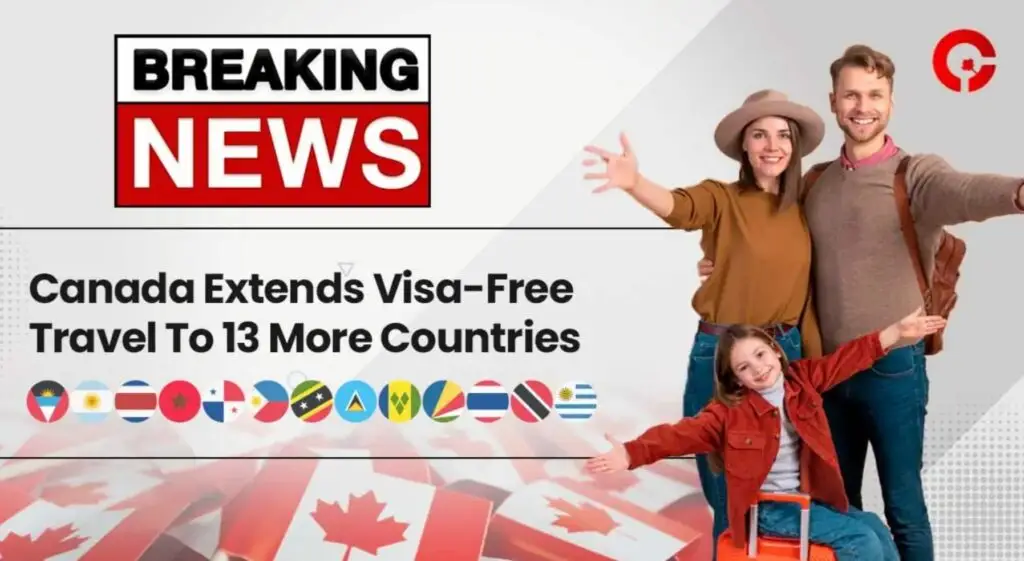
Canada’s Visa-Free Entry Expansion: The Government of Canada announced a major expansion of its Electronic Travel Authorization (eTA) program, enabling citizens of 13 additional countries to travel to Canada without the traditional visitor visa when arriving by air provided they meet certain eligibility conditions.
This was a significant update to Canada’s immigration and travel policy, aimed at simplifying entry procedures and boosting international travel. Before the change, passport holders from these countries generally needed to apply for a Temporary Resident Visa (TRV), a process that could take several weeks or months at Canadian visa offices abroad.
Instead, eligible travelers can now complete a fast, online eTA application usually in minutes saving time, money, and paperwork.
ALSO READ: Canadian Job Listing Websites for Hiring Foreign Workers With Sponsorship
List of the 13 Countries Added to Canada’s Visa-Free eTA Program
The 13 countries whose citizens now qualify to apply for an eTA (and thus enter Canada without a visa) are:
- Antigua and Barbuda
- Argentina
- Costa Rica
- Morocco
- Panama
- Philippines
- Saint Kitts and Nevis
- Saint Lucia
- Saint Vincent and the Grenadines
- Seychelles
- Thailand
- Trinidad and Tobago
- Uruguay
This list blends Caribbean island nations, Latin American states, and countries from Africa and Southeast Asia, reflecting a broad geographic spread.
How This Visa-Free Entry Works
What “Visa-Free” Actually Means
In Canada’s context, visa-free for these countries usually doesn’t mean no documentation at all. Instead:
- Citizens from these 13 countries can skip applying for a visitor visa (TRV) before travel.
- They must apply for an Electronic Travel Authorization (eTA) online prior to boarding a flight to Canada.
- The eTA is a digital travel authorization linked electronically to a traveler’s passport. Once approved, it allows multiple entries to Canada by air for up to six months per visit.
- It is typically valid for up to five years or until the passport expires, whichever comes first.
Eligibility Conditions
To qualify for the eTA under this expansion, travelers from the listed countries must satisfy one of the two conditions:
- Held a Canadian visa in the last 10 years, or…
- Currently hold a valid U.S. non-immigrant visa (e.g., a B1/B2 tourist visa).
If neither condition applies, travelers must still apply for a regular visa through the traditional TRV process.
Limitations to Be Aware Of Canada’s Visa-Free Entry eTA
- The eTA program only applies to air travel. Entering Canada by land or sea (e.g., from the U.S.) still generally requires a TRV unless exempt under other rules.
- The eTA does not entitle the traveler to work or study; those purposes require separate permits.
Step-by-Step: How to Apply for an eTA
Here’s the typical process for eligible travelers:
1. Prepare Your Documents
You’ll need:
- A valid passport from one of the 13 countries
- Credit/debit card to pay the application fee (about CAD $7)
- A valid email address to receive your eTA decision and confirmation.
2. Visit the Official Website
Go to the Government of Canada’s official eTA portal:
- www.canada.ca/eTA
- This is the only secure and official place to apply (third-party sites often charge extra fees).
3. Complete the Online Form
The online form asks for basic personal details, passport information, and travel intentions. It usually takes just a few minutes to complete.
4. Submit and Wait
Most applicants receive approval within minutes, though some may be asked for additional documentation or undergo further review.
5. Receive Your eTA by Email
Once approved, your eTA is linked to your passport electronically. Airlines will check your authorization before you board your flight to Canada.
Why Canada Expanded Visa-Free Access
Canada’s decision to add these 13 countries wasn’t random — it reflects strategic, economic, and diplomatic goals:
1. Boost Tourism and Travel
Canada is a popular destination for natural wonders, vibrant cities, and multicultural experiences. Making travel easier for new groups encourages tourism, which supports local economies from coast to coast.
2. Strengthen Business and Economic Ties
Easier travel facilitates business trips and networking — especially with growing economies in Latin America, Southeast Asia, and the Caribbean. This can lead to investment, trade deals, and deeper commercial relationships.
3. Enhance Global Relationships
Canada has longstanding diplomatic and cultural ties with many of these countries. Expanding travel access helps deepen those relationships, promote people-to-people contact, and foster goodwill.
4. Modernize Immigration Processing
The eTA program is cheaper and faster to process than traditional visas. Redirecting thousands of short-term travel applications into this streamlined system eases pressure on Canadian visa-processing centers.
5. Stay Competitive in Global Mobility
Other countries have expanded their own visa-free and electronic travel programs. Canada’s move keeps it competitive as a welcoming travel destination.
Is This Policy Unique? Trends in Global Travel
Canada isn’t alone in expanding accessible entry pathways. Many nations are recognizing the economic value of tourism, global mobility, and simplified travel documents (such as e-visas and electronic authorizations). These policies balance security screening with ease of travel — helping both travelers and host countries.
However, Canada’s policy is not unconditional visa-free entry. The requirement to have previously held a Canadian visa or to have a U.S. visa highlights how immigration authorities balance security concerns with efforts to broaden access.
Who Benefits Most from This Policy?
- Tourists: People planning vacations, family visits, or cultural trips to Canada benefit from less paperwork and faster entry approvals.
- Business Travelers: Entrepreneurs, professionals, and business visitors can make short visits more efficiently and frequently.
- Frequent Flyers: Travelers who already hold U.S. visas — a large portion of long-haul flyers — will find Canada easier to add to their travel itineraries.
In Summary
Canada’s visa-free eTA expansion for 13 countries marks a big step toward simpler and more accessible travel for eligible visitors from the Caribbean, Latin America, Africa, and Southeast Asia. By reducing bureaucracy and leveraging electronic processing, this policy:
- Cuts red tape while keeping security safeguards.
- Promotes tourism and international business growth.
- Strengthens diplomatic and cultural ties.
- Improves processing efficiency at visa offices worldwide.
The change reflects Canada’s long-term strategy of welcoming more international visitors while balancing immigration security and economic opportunity.
If you’re planning a trip to Canada and want help checking eligibility or walking through the eTA application form step by step, just let us know in the comment section…


Pingback: Yahoo Mail Sign In – Open Email on Mobile & PC - GISTWAVESMEDIA.COM
Pingback: US Business Visa Application | Step-by-Step Guide - GISTWAVESMEDIA.COM