
Types Of Taxes In Nigeria: Taxes are compulsory levies that individuals and businesses must pay to the government to generate revenue for government expenditure.
Taxes are typically levied on income, property, goods and services, and other economic activities. The Nigerian Government collects taxes in a variety of ways and they each serve different purposes.
This article briefly discusses the different types of taxes we have in Nigeria and what you need to know about them.
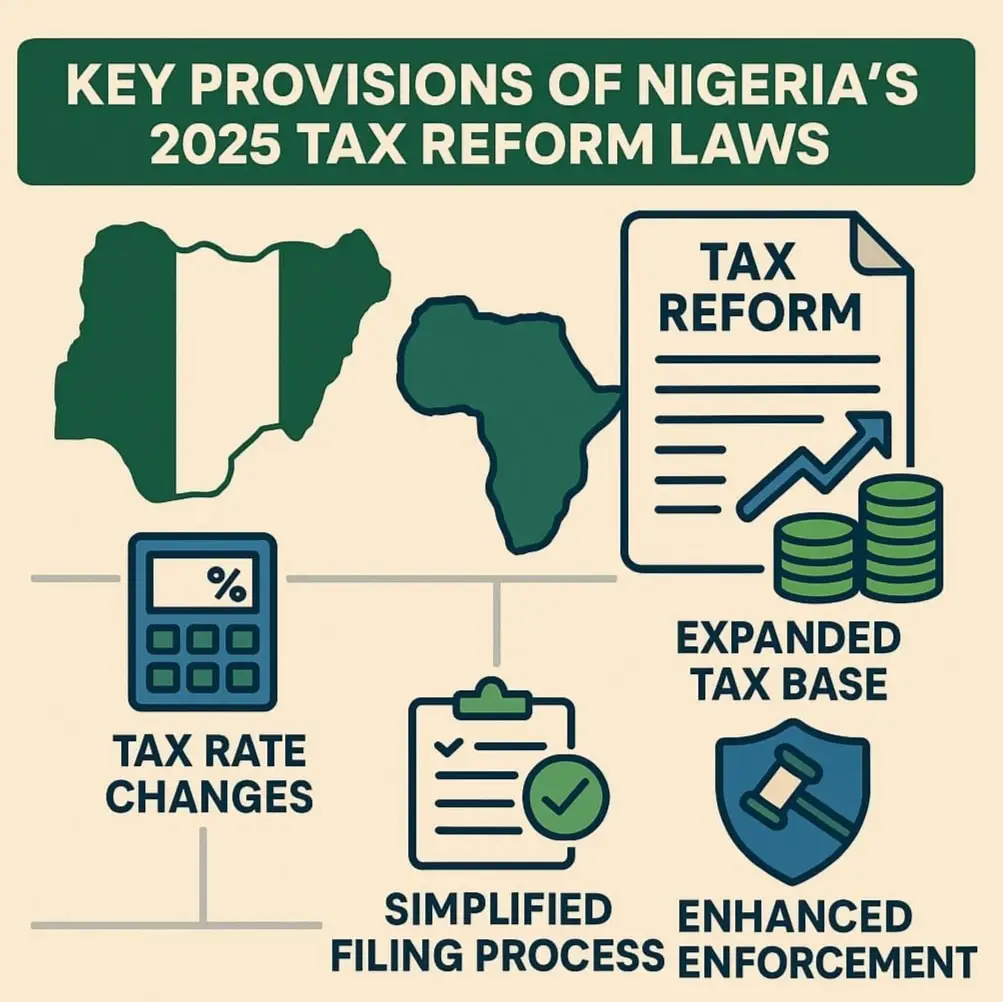
ALSO READ: Nigeria 2025 Tax Reform: Key Provisions Explained
Types of Taxes In Nigeria
1. Personal Income Tax (PIT)
Personal Income Tax is the tax imposed on individuals who are in employment or self-employed through businesses or partnerships. It is paid to the jurisdiction of the State Inland Revenue Service in the payer’s state of residence.
Individuals who are in employment pay their taxes which are deducted from their income through a system called Pay As You Earn (PAYE). Self-employed individuals pay through a process called direct assessment.
Direct Assessment is an income tax that is imposed on self-employed persons. It is usually applied to individuals who operate small businesses.
Simple Breakdown:
- Who pays: Individuals in specific categories:
- Armed forces
- Police
- Foreign service officers
- Residents of the Federal Capital Territory (FCT)
- Rate: Progressive, up to 24%
- Administered by: FIRS (for the above categories)
2. Company Income Tax (CIT)
Company Income Tax is the tax paid by all corporate entities in Nigeria to the Federal Inland Revenue Service. It is usually 30% of the company’s total profit.
All companies registered in Nigeria are expected to pay this tax except companies involved in petroleum activities (This is covered by the Petroleum Profit Tax Act).
Simple Breakdown:
- Who pays: Registered companies (excluding petroleum companies)
- Rate: 7.5
- Small companies (turnover ≤ ₦25 million): 0%
- Medium companies (₦25m–₦100m): 20%
- Large companies (> ₦100m): 30%
Purpose: Tax on profits made by companies operating in Nigeria.
3. Value Added Tax (VAT)
Value Added Tax is an indirect taxation imposed on goods and services. The final consumer of purchased goods or rendered services pays the VAT charges.
And Value Added Tax is usually a 7.5% rate and it is paid to the business owner or service provider who sums it up and pays to the FIRS.
Simple Breakdown:
- Who pays: Consumers (collected and remitted by businesses)
- Rate: 7.5%
- Applies to: Most goods and services, excluding exempt items like basic food, medical services, and education.
- Purpose: Consumption tax that contributes significantly to government revenue.
4. Withholding Tax (WHT)
Withholding Tax is an amount deducted from a person’s income to pay a tax they will owe. It is not exactly a type of tax but a method of payment.
In this case, the employer also pays the tax from the income instead of the employee. The percentage deducted from the income varies according to the tax to be paid. But it’s usually between 5% to 10%.
Simple Breakdown:
- Who pays: Individuals and businesses (deducted at source)
- Rate: 5% – 10%, depending on the transaction
- Applies to: Rent, dividends, interest, consultancy, contracts, royalties.
- Note: It is an advance tax, not a final tax.
5. Petroleum Profit Tax (PPT)
Petroleum Profit Tax is the tax imposed on the income of all companies involved in upstream petroleum activities at a rate of 50% to 85%, and Companies who pay this tax are exempted from the Company Income Tax according to the Petroleum Profit Tax Act.
Simple Breakdown:
- Who pays: Oil exploration and production companies
- Rate: Between 50% – 85%, depending on the nature of operations
- Purpose: Tax on profits from petroleum operations.
6. Capital Gain Tax (CGT)
Capital Gain Tax is a 10% tax imposed on the profit of chargeable assets, either from sales or exchange. When an asset or investment makes a profit with a positive difference from the original price, a capital gain tax is expected to be paid.
Simple Breakdown:
- Who pays: Individuals and companies
- Rate: 10%
- Applies to: Profits from sale of assets such as land, buildings, shares, and machinery.
7. Stamp Duties (SD)
Stamp Duties Tax is a kind of tax imposed on written or electronic legal instruments/documents. But It affects legal documents such as cheques, receipts, military commissions, agreements, bills of exchange, etc.
Also, For instance, in Nigeria, electronic transfers through traditional banks that are above #10,000 attract a stamp duty fee of #50.
Simple Breakdown:
- Who pays: Individuals and companies
- Rate: Varies (often ₦50 or percentage-based)
- Applies to: Legal documents, agreements, bank transfers above a threshold.
8. Education Tax (EDT)
Education Tax is a 2% tax imposed on the income of all registered companies in Nigeria to fund the Tertiary Education Trust Fund (TETFUND). This is then used to fund projects in tertiary institutions.
Simple Breakdown:
- Who pays: Companies
- Rate: 2.5% of assessable profits
- Purpose: Funds tertiary education through TETFund.
9. National Information Technology Development Levy (NITDL)
The National Informational Technology Development tax is paid by specific companies with an annual turnover of N100 million and above. It is a 1% tax before profit levy. Companies that pay this tax include;
- GSM service providers and telecommunication companies
- Internet providers
- Pension managers and pension-related companies
- Banks and other financial institutions
- Insurance companies, etc
Simple Breakdown:
- Who pays: Companies and enterprises operating in specific sectors such as telecommunications, information technology, internet services, banks, insurance companies, and other designated digital-based businesses.
- Rate: 1% of profit before tax.
- Administered by: Federal Inland Revenue Service (FIRS) on behalf of the National Information Technology Development Agency (NITDA).
- Applies to: Companies with an annual turnover of ₦100 million and above.
- Purpose: To support the development of Nigeria’s IT ecosystem, including technology infrastructure, digital innovation, capacity building, and tech startups.
- Legal backing: National Information Technology Development Agency (NITDA) Act.
This levy is aimed at strengthening Nigeria’s digital economy and ensuring that major technology-driven businesses contribute to national IT growth.
Importance of Taxation in Nigeria
- Source of income for the government: Taxation is a significant source of revenue for the government which is used in running the cost of governance.
- Infrastructural development: Through the payment of taxes, the government can build social infrastructures that help to reduce poverty.
- Educational support: Through Education Tax, the government can support tertiary education with the Tertiary Education Trust Fund.
- Economy Stabilization: With the aid of taxation, the government can plan and work on projects that will foster economic growth and stabilization.
- Creation of employment opportunities: Part of economic growth and infrastructural development is the creation of job opportunities.
READ ALSO: Online Businesses You Can Start Today With Little or No Money
Consequences of Not Paying Taxes
Failure to comply with tax laws in Nigeria can lead to:
- Heavy fines and penalties
- Interest on unpaid taxes
- Business closure or blacklisting
- Legal prosecution
What are the tax authorities in Nigeria?
Three bodies across the different levels of government handle taxation in Nigeria. They include;
- Federal Board of Inland Revenue
- State Inland Revenue Board
- Local Government Revenue authorities
What are the main tax systems?
The main tax systems are Progressive, Regressive and Proportional.
- Progressive: In this system, higher-income earners pay a higher percentage of taxes than low-income earners.
- Regressive: In the regressive tax system, lower-income earners pay a higher percentage of taxes than high-income earners
- Proportional: This is a system of taxation where the same percentage of taxes is paid by all income groups.
What Type Of Tax System Does Nigeria Use?
Nigeria operates a decentralized system in which the various levels of government are responsible for the taxes within their jurisdiction.
They also employ the progressive tax system where an individual with a higher income pays higher taxes.
CONCLUSION
Taxation is a significant aspect of government. Different taxes are imposed on the income and profit of individuals and businesses at different levels which aid the government in generating revenue and pursuing better economic possibilities.
Do you now know more about the Types Of Taxes In Nigeria ? What better financial decisions will you make with this information? Tell us about it in the comment section.

Pingback: Life Insurance Companies In Nigeria | Best Ones To Go For - GISTWAVESMEDIA.COM