
Disavow Toxic Backlinks: You’ve just run a backlink audit and your stomach drops; finding out dozens of spammy links from questionable websites are pointing to your site. Your rankings have been slipping, and now you’re wondering if these toxic backlinks are the culprit.
Before you rush to Google’s Disavow Tool, stop. This powerful tool can save your website from penalties, but misuse it and you’ll tank your rankings yourself.
This guide shows you exactly when to disavow, when to walk away, and how to execute the process safely without destroying your hard-earned SEO progress.
ALSO READ: Site Index | Everything You Need To Know
Disavow Toxic Backlinks – What Are Toxic Backlinks?
Toxic backlinks are links from low-quality, spammy, or manipulative websites that point to your site. These links violate Google’s Webmaster Guidelines and can trigger manual penalties or algorithmic demotions.
Google’s algorithms have become more sophisticated at identifying and ignoring poor-quality links automatically. However, certain link patterns still raise red flags, particularly when they appear manipulative or part of a link scheme.
What is Google Disavow Tool?
Google created the Disavow Tool in 2012 to help webmasters distance themselves from harmful backlinks they couldn’t remove manually. This tool tells Google to ignore specific links when assessing your site’s ranking.
Think of the Google disavow tool as your last resort, not your first defence; because this tool exists primarily for penalty recovery, not routine link maintenance. You submit a text file listing URLs or domains you want Google to disregard, and Google processes this information during its next crawl of your site.
The tool doesn’t remove those toxic links, it simply instructs Google’s algorithm to pretend those links don’t exist when evaluating your website’s authority and trustworthiness.
How Bad Links Impact Your Rankings
Not all bad links harm your rankings. Google’s current algorithms ignore most low-quality links automatically without any action needed from you.
However, links can damage your site when they create an unnatural link pattern that Google interprets as manipulation. This includes links from Private Blog Networks (PBNs), paid link schemes, automated link programmes, and websites created solely to pass PageRank.
When Google detects these patterns, two things can happen. First, algorithmic filters may suppress your rankings automatically. Second, Google’s manual review team might issue a Manual Action penalty, which appears in your Search Console account with specific instructions for recovery.
Manual Actions are serious. They can remove your site from search results entirely until you clean up the problematic links and submit a reconsideration request.
The Right Method of Peppering Your Disavow Toxic Backlinks File for Upload
To disavow an entire domain (recommended when multiple pages on the same site link to you), use this format:
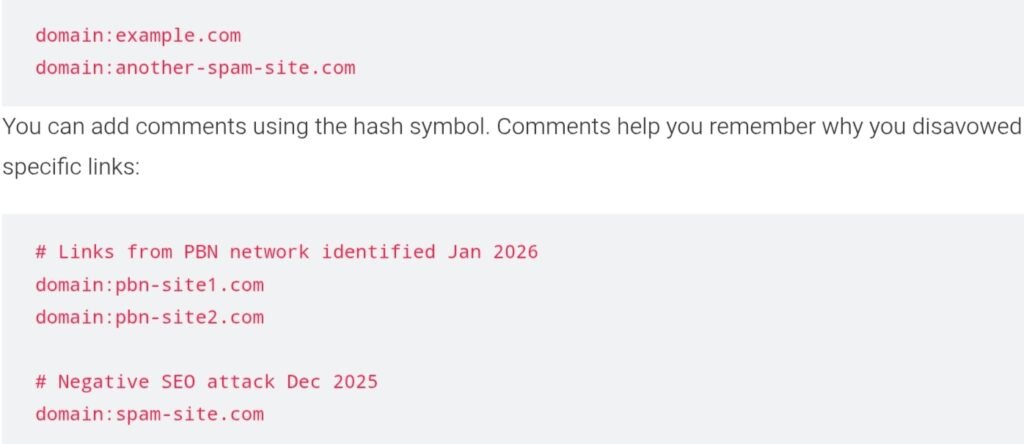
- Save your file with a .txt extension (using Notepad). Name it something descriptive like “disavow-yoursite-jan.txt”.
- Your file must meet specific requirements. Use UTF-8 or 7-bit ASCII encoding. Keep the file size under 2MB (approximately 100,000 URLs). Include only one URL or domain per lin
- Remove any blank lines at the end of the file. Ensure each domain entry starts with “domain:” without space
- Double-check for typos. A misspelt domain name won’t disavow anything, and you might accidentally leave harmful links activ
- You should be ready to disavow after preparing your disavow file following the steps above.
Now, also follow the steps below to get the disavow process done correctly.
ALSO READ: Google 2-Step Verification – Full Guides On How It Works
How to Disavow Toxic Backlinks
- Already you’re still Logged in to your Google Search Console, You should create a new tab on the same browser that you’re logged in, then go to the dedicated Google Disavow Tool.
- Remember, you can always change/switch to your preferred Google account incase you aren’t logged into the correct email address.
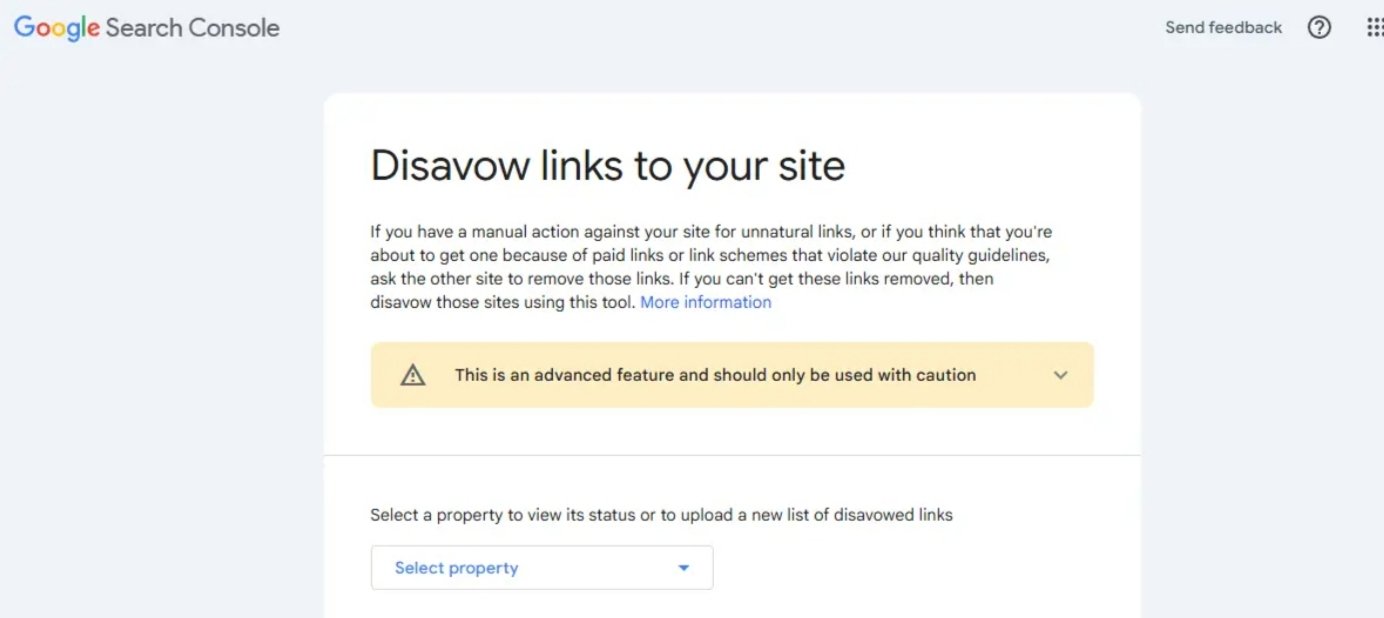
- Then select a property (the website) to view its status or to upload a new list of disavowed toxic links which you have prepared down.
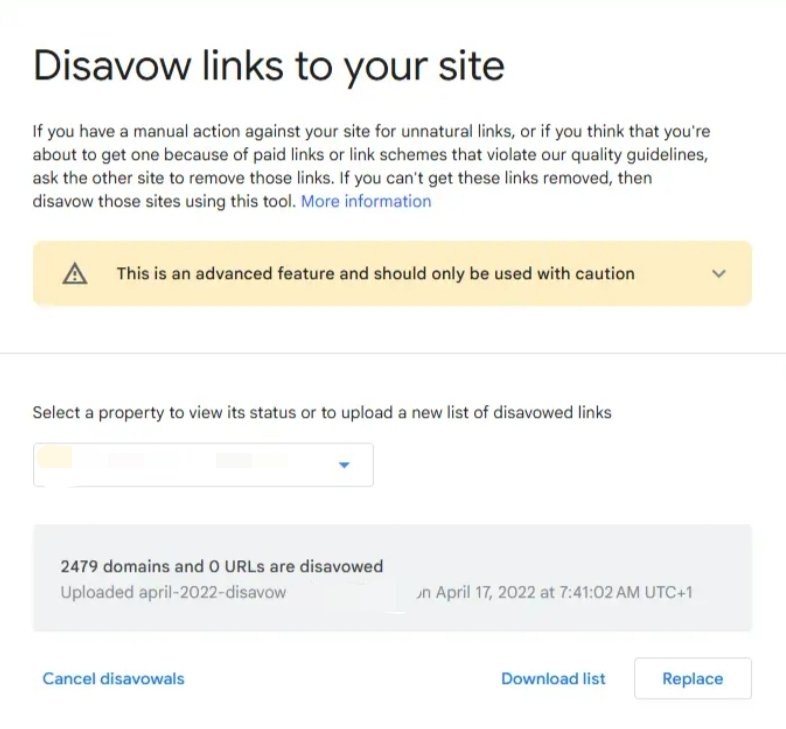
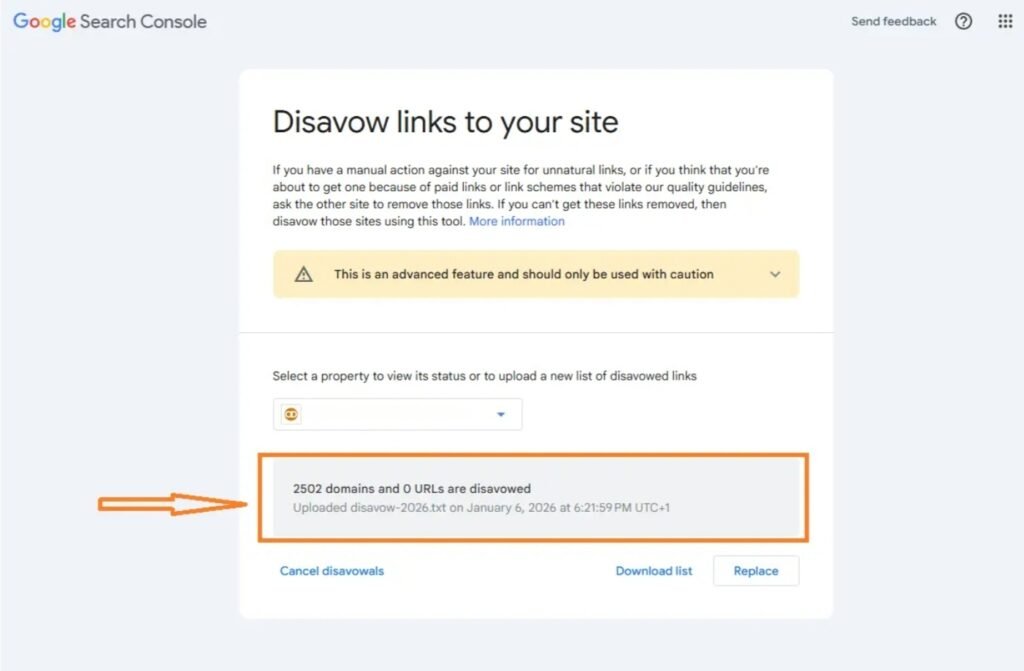
- From my disavowed uploads you’ll see that the number of domains I had already submitted for disavow, but like I already said, it is a continues process, meaning you keep checking for new links and keep adding them to the previous list and updating your previous submitted disavowed files.
If this is your first time of using the Google’s Disavow tool, then you have to upload the file you prepared. While ensuring that subsequent times you keep checking for more toxic links that could hurt your website ranking and still add to the previously uploaded file list. The process continues.
- You will see “Upload” as a first time attempt.
- Wait for the upload to complete, the time it takes depends on the size of your disavow file. Then you should get a notification that the upload is completed and submitted for disavow once the upload is completed.
Also, another information to take note of is the number of your total disavow domains will increase. See mine as a better example of this.
This is all!
Why You Must Disavow Toxic Backlinks
This brings us to the strategic value of disavowing toxic backlinks. Consider this: why does a successful business carefully choose its partnerships and associations?
Why does a farmer meticulously remove weeds that compete with crops for nutrients and sunlight? The answer is simple: both actions create the optimal conditions for growth, visibility, and tangible results.
The same principle applies to your website’s link profile. Disavowing harmful backlinks removes digital associations that misrepresent your brand, compromise your search visibility, and undermine the authority you’ve worked to build.
But lets go into digital marketing terms now:
- Protect your site from Google penalties
- Recover lost rankings and traffic
- Safeguard your brand reputation
- Clean up inherited link problems
- Defend against negative SEO attacks
- Maintain long-term SEO health
- Regain control of your link profile
What to Expect After Submission
Google processes disavow files when it recrawls your site and the linking pages. This can take several weeks or even months for the full effect to materialise.
You won’t see immediate ranking improvements. In fact, you might see temporary fluctuations as Google recalculates your link equity without the disavowed links.
Monitor your rankings and organic traffic weekly. If you notice significant drops after disavowing, you may have removed valuable links by mistake.
READ ALSO: Google SEO: Setup Google Search Console Tool for SEO
How to Update or Undo a Disavow Toxic Backlinks
Want to add more bad links to the list or made an error? You can reverse disavowed links, though recovery takes time.
Return to the Disavow Links Tool in Google Search Console and download your current disavow file. Open it in a text editor, add or remove the entries you want to restore, and save the changes.
Upload this edited file to replace your previous disavow list entirely. Google reconsiders removed links during its next crawl, but full recovery typically takes 4-8 weeks or longer for infrequently crawled sites.
Conclusion
Disavowing toxic backlinks is a critical SEO maintenance step when your site is affected by spammy or manipulative links. When done carefully—after a proper backlink audit—it helps protect your website’s trust, restore rankings, and prevent long-term penalties. Always disavow only clearly harmful links, follow Google’s guidelines, and combine the process with consistent, high-quality link building for sustainable SEO growth.

Pingback: Link Website to Social Media: Easy Setup Guide - GISTWAVESMEDIA.COM