An Emergency Fund is one of the most important financial safety nets anyone can build. Life is unpredictable, and unexpected events such as job loss, medical emergencies, urgent home repairs, or sudden travel needs can disrupt your finances overnight.
Without a financial buffer, many people rely on high-interest credit cards or loans during these situations, which often leads to long-term debt.
Building an Emergency Fund allows you to handle financial shocks without damaging your long-term financial stability. It provides peace of mind, protects your savings goals, and prevents you from making desperate financial decisions during stressful moments.
However, one of the most common questions people ask is: How much should you actually save in your Emergency Fund? Some financial experts recommend three months of expenses, while others suggest six months or even more. The correct answer depends on several factors such as income stability, family size, lifestyle, and financial responsibilities.
In today’s uncertain economic environment, having a properly funded Emergency Fund is more important than ever. Whether you are a salaried worker, self-employed professional, freelancer, or business owner, preparing for financial emergencies should be a priority.
This guide will help you understand how an Emergency Fund works, how much you should realistically save, the best strategies for building one quickly, and where to keep the money so it remains safe and accessible when you truly need it.
ALSO READ: Education Loans to Study Abroad: How to Apply Easily
What Is an Emergency Fund?
It is a dedicated pool of money set aside specifically to cover unexpected financial situations. Unlike regular savings, this money is not meant for planned expenses such as vacations, shopping, or buying gadgets.
Instead, it exists solely to protect you from financial hardship during emergencies.
Typical situations where an Emergency Fund may be needed include:
- Sudden job loss
- Medical emergencies
- Car repairs
- Urgent home repairs
- Unexpected travel due to family issues
- Temporary loss of income
- Emergency relocation
The goal of an Emergency Fund is simple: to give you financial breathing room during difficult times.
Without one, people often turn to borrowing money, which can create a cycle of debt that takes years to escape.
Why an Emergency Fund Is Essential for Financial Stability
Many people underestimate the importance of an Emergency Fund until they face a financial crisis. When unexpected expenses appear, the absence of a financial cushion can lead to serious stress.
Here are several reasons why building an Emergency Fund should be a top financial priority.
Protection Against Income Loss
One of the most important functions of an Emergency Fund is to protect you if you lose your job or experience a reduction in income.
With savings that cover several months of expenses, you can continue paying bills while searching for another job or rebuilding your income.
Avoiding High-Interest Debt
When emergencies happen and there is no savings available, people often rely on credit cards, payday loans, or personal loans.
These financial options often come with high interest rates, which can quickly turn a small financial problem into a long-term debt burden.
An Emergency Fund eliminates the need to borrow money during urgent situations.
Peace of Mind
Financial stress is one of the most common sources of anxiety. Knowing that you have money set aside for emergencies creates a sense of security and stability.
It allows you to make calm decisions rather than reacting emotionally during financial challenges.
Protecting Long-Term Financial Goals
Without an Emergency Fund, people often withdraw money from retirement savings, investment accounts, or education funds when emergencies arise.
Doing this can seriously delay long-term financial progress. An Emergency Fund protects those important savings goals.
How Much Should You Really Save?
The biggest question most people ask about an Emergency Fund is how much money they actually need.
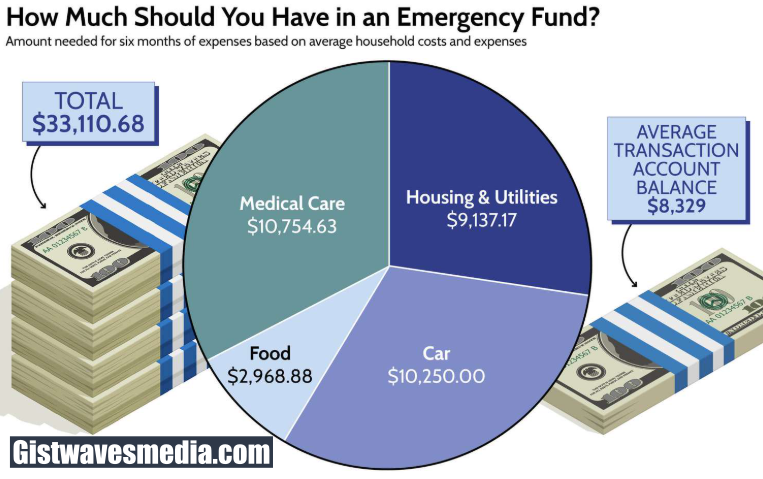
Financial experts commonly recommend saving three to six months of living expenses, but this is only a general guideline.
The right amount depends on your personal financial situation.
Three Months of Expenses
Saving three months of essential expenses is often considered the minimum Emergency Fund level.
This may be sufficient for individuals who:
- Have stable full-time employment
- Work in industries with low job loss risk
- Have dual household incomes
- Have minimal financial responsibilities
For example, if your monthly essential expenses are $1,000, a three-month Emergency Fund would be $3,000.
Six Months of Expenses
Many financial advisors recommend saving six months of expenses for better financial security.
This is ideal for people who:
- Are the sole income earners in their household
- Work in industries with job uncertainty
- Have dependents such as children or family members
- Have large financial obligations
If your monthly expenses are $2,000, your six-month Emergency Fund should be $12,000.
Nine to Twelve Months of Expenses
In some situations, saving up to nine or twelve months of expenses may be necessary.
This is especially important for:
- Self-employed individuals
- Freelancers
- Business owners
- People with irregular income
Because income can fluctuate, a larger Emergency Fund offers greater protection.
How to Calculate Your Emergency Fund Amount
Before building an Emergency Fund, you must determine how much money you actually need.
This requires calculating your essential monthly expenses.
Step 1: List Your Necessary Expenses
Focus only on expenses that are required for survival and basic living.
Examples include:
- Rent or mortgage payments
- Food and groceries
- Utility bills
- Transportation costs
- Insurance payments
- Loan repayments
- Healthcare expenses
Avoid including optional spending such as entertainment or luxury shopping.
Step 2: Calculate Monthly Essential Costs
Add together all your essential expenses to determine how much money you need each month.
Example calculation:
- Rent: $600
- Food: $250
- Utilities: $120
- Transportation: $100
- Insurance: $80
Total monthly essential expenses: $1,150
Step 3: Multiply by Desired Coverage
Now multiply your monthly expenses by the number of months you want your Emergency Fund to cover.
Examples:
- 3 months: $3,450
- 6 months: $6,900
- 12 months: $13,800
This gives you a realistic target for your Emergency Fund.
READ ALSO: Smart Budgeting Tips For Young Professionals
Factors That Affect How Much You Can Save
There is no universal number that works for everyone. Several factors influence the size of an Emergency Fund.
Job Stability
If your job offers strong security and stable income, you may require a smaller Emergency Fund.
However, individuals in volatile industries may need a larger safety buffer.
Household Size
Larger households naturally have higher expenses.
If you support a family, your Emergency Fund should be bigger to cover everyone’s needs.
Health Considerations
Medical emergencies can be expensive. If you have health concerns or limited health insurance, saving more money is wise.
Income Type
People with unpredictable income streams, such as freelancers or entrepreneurs, should build larger Emergency Funds.
Income fluctuations can make financial planning more challenging.
Debt Obligations
If you have loans, credit card payments, or mortgages, you need enough savings to continue meeting these obligations during emergencies.
Best Strategies to Build an Emergency Fund Faster
Saving a large amount of money may seem difficult at first. However, with the right strategy, building an Emergency Fund becomes achievable.
Start with Small Contributions
Many people delay building an Emergency Fund because they believe they need to save a large amount immediately.
Instead, begin with small consistent deposits.
Even saving a small percentage of income each month can grow significantly over time.
Automate Your Savings
One of the easiest ways to build an Emergency Fund is to automate the process.
Set up automatic transfers from your main bank account to your emergency savings account each month.
Automation removes the temptation to spend the money elsewhere.
Cut Non-Essential Spending
Review your monthly spending and identify areas where you can reduce unnecessary expenses.
Examples include:
- Subscription services
- Dining out frequently
- Impulse purchases
- Entertainment expenses
Redirect these savings into your Emergency Fund.
Use Unexpected Income
Whenever you receive unexpected money, consider adding a portion to your Emergency Fund.
Examples include:
- Work bonuses
- Tax refunds
- Freelance income
- Monetary gifts
This can significantly accelerate your savings progress.
Increase Income Streams
If possible, consider creating additional income sources such as freelance work, online services, or side businesses.
Extra income can help you build your Emergency Fund faster.
Where Should You Keep Your Emergency Fund?
Choosing the right place to store your Emergency Fund is just as important as saving the money itself.
The ideal location should provide safety, accessibility, and minimal risk.
High-Yield Savings Accounts
High-yield savings accounts are one of the most popular options for storing an Emergency Fund.
They offer:
- Easy access to money
- Interest earnings
- Low risk
Money Market Accounts
Money market accounts combine features of savings accounts and checking accounts.
They typically offer higher interest rates and easy withdrawals.
Separate Savings Accounts
Keeping your Emergency Fund in a separate account prevents accidental spending.
It also creates a clear boundary between everyday money and emergency savings.
Avoid Risky Investments
An Emergency Fund should not be invested in volatile assets such as stocks or cryptocurrency.
These investments can lose value during market downturns, which is often when you may need the money most.
Common Mistakes People Make
Even people who build an Emergency Fund sometimes misuse it.
Avoiding these common mistakes helps maintain its effectiveness.
Using the Fund for Non-Emergencies
An Emergency Fund should only be used for genuine emergencies.
Spending it on vacations, gadgets, or lifestyle upgrades defeats its purpose.
Keeping the Fund Too Small
Some people stop saving after reaching a small amount that cannot truly cover a financial emergency.
Ensure your Emergency Fund matches your actual expenses.
Not Replenishing the Fund
After using money from your Emergency Fund, it is important to rebuild it as soon as possible.
Failing to replenish it leaves you vulnerable to future emergencies.
Keeping the Money Too Accessible
If your emergency savings are in your everyday spending account, it may be tempting to use the money unnecessarily.
Separate accounts help protect the fund.
How Long Does It Take to Build an Emergency Fund?
The timeline for building an Emergency Fund varies depending on income, savings habits, and expenses.
Some people may build a basic fund within a few months, while others may take several years.
Here are some example timelines:
Saving $100 per month:
- 3 months expenses ($3,000): 30 months
- 6 months expenses ($6,000): 60 months
Saving $300 per month:
- $3,000 fund: 10 months
- $6,000 fund: 20 months
Consistency is more important than speed. Even slow progress will eventually build a strong Emergency Fund.
ALSO READ: The Power Of Strategic Thinking In Business & Personal Life
When Should You Use Your Emergency Fund?
An Emergency Fund should only be used when the situation is both unexpected and necessary.
Examples of valid emergency uses include:
- Medical emergencies
- Essential home repairs
- Job loss
- Urgent travel due to family emergencies
- Car breakdowns required for work
If the expense can be planned or delayed, it likely should not come from your Emergency Fund.
Conclusion
Building an Emergency Fund is one of the most powerful financial decisions you can make. It provides protection against unexpected events, reduces financial stress, and prevents debt during difficult times.
Although financial experts often recommend saving three to six months of expenses, the ideal Emergency Fund size depends on your personal circumstances. Factors such as job stability, household responsibilities, income type, and health risks all play important roles in determining the right amount.
The most important step is simply starting. Even small savings contributions can gradually grow into a strong financial safety net.
By consistently saving, reducing unnecessary spending, and protecting your Emergency Fund from misuse, you can create a financial cushion that keeps you secure no matter what challenges life brings.
An Emergency Fund is not just a savings account. It is financial protection, peace of mind, and a foundation for long-term financial success.
Kindly use our comment section below for more enquirires on Emergency Fund: How Much Should You Really Save?