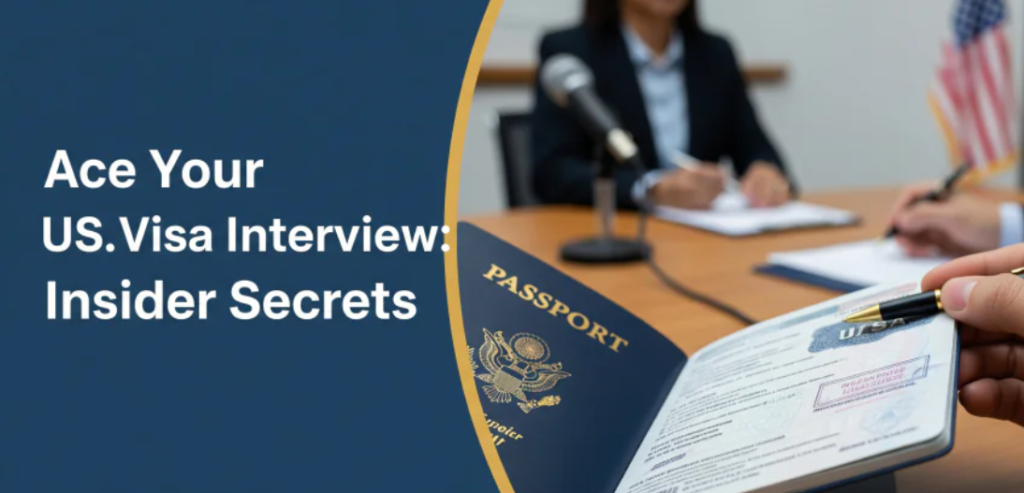
US Business Visa Interview Guide: Applying for a U.S. business visa can be an exciting step toward expanding your professional opportunities, attending conferences, negotiating contracts, or exploring partnerships in one of the world’s largest economies.
However, for many applicants, the visa interview is the most stressful part of the process. Understanding what to expect — and how to prepare — can dramatically improve your confidence and your chances of approval.
This detailed guide covers everything you need to know about the interview process, from preparation strategies to common questions and behavioral tips. These US Business Visa Interview Tips are designed to help you walk into the embassy or consulate fully prepared, organized, and professional.
ALSO READ: US Business Visa Application | Step-by-Step Guide
Understanding the US Business Visa (B1 Visa)
Before preparing for the interview, it’s important to understand what a U.S. business visa is — and what it is not.
The B1 visa is intended for short-term business activities such as:
- Attending business meetings
- Negotiating contracts
- Participating in conferences or seminars
- Consulting with business associates
- Settling estates
- Engaging in professional training (without salary from a U.S. source)
It is not meant for employment or long-term work. The consular officer’s main concern during the interview is determining whether you truly intend to visit temporarily and return home afterward.
This understanding forms the foundation of your interview preparation.
What Happens During a US Business Visa Interview
The interview is usually brief — often between 2 to 5 minutes — but extremely important. During this time, the officer evaluates:
- Your purpose of travel
- Your financial capability
- Your ties to your home country
- Your credibility and honesty
- Your travel history
- Your intent to return
Even though the interview is short, your preparation must be thorough. The officer forms a judgment quickly, often based on clarity, confidence, and consistency in your responses.
Strategy 1: Understand Your Business Purpose Clearly
One of the most important US Business Visa Interview Tips is to be able to clearly explain your purpose of travel.
Many applicants fail because their explanation sounds vague or rehearsed. The officer wants to hear a natural, specific, and logical reason for your trip.
How to prepare:
- Know the exact company you are visiting
- Understand the nature of your meetings
- Be able to explain your role in the company
- Know how long the trip will last
- Understand how the trip benefits your business or employer
Avoid generic answers like:
“I’m going for business meetings.”
Instead say:
“I’m attending a 3-day conference hosted by XYZ Corporation in Chicago to discuss partnership opportunities in logistics technology.”
Specific details show legitimacy and preparation.
Strategy 2: Prepare Strong Supporting Documents
While interviews are conversation-based, documents support your credibility. Officers may not review every paper, but having them ready is crucial.
Key documents include:
- Invitation letter from U.S. company
- Employer letter stating your role and salary
- Business registration documents
- Bank statements
- Travel itinerary
- Conference registration proof
- Tax records (if self-employed)
Organize your documents neatly in a folder. Do not overwhelm the officer by handing everything at once. Provide documents only when requested.
Professional organization signals seriousness and responsibility.
Strategy 3: Demonstrate Strong Ties to Your Home Country
The officer must believe that you will return home. This is a legal requirement under U.S. immigration law.
Strong ties include:
- Stable employment
- Business ownership
- Property ownership
- Family commitments
- Educational enrollment
- Financial investments
Explain these ties naturally during the interview. You do not need to list everything aggressively. Your life story should communicate stability and responsibility.
For example:
“I run a registered import company with 8 employees and I manage operations daily. I’ll return after the conference because we have ongoing contracts.”
This shows roots and obligations.
Strategy 4: Practice Clear and Honest Communication
Confidence matters, but honesty matters more.
Consular officers are trained to detect inconsistencies. If your answers change or sound memorized, suspicion increases.
Best practices:
- Answer only what is asked
- Keep responses concise
- Maintain eye contact
- Speak calmly and respectfully
- Avoid over-explaining
- Never lie
If you don’t understand a question, politely ask for clarification instead of guessing.
Honesty builds trust quickly.
Strategy 5: Dress Professionally For Your US Business Visa Interview
Appearance influences first impressions.
You don’t need expensive clothing, but you should look professional and neat. Business casual attire is ideal.
For men:
- Button-down shirt
- Trousers
- Closed shoes
For women:
- Blouse or modest dress
- Professional footwear
Avoid flashy accessories or casual wear. You want to appear like a serious business traveler.
Strategy 6: Arrive Early and Stay Calm
Embassies operate on strict schedules. Arriving late increases anxiety and may disrupt your focus.
Arrive at least 30–45 minutes early.
While waiting:
- Breathe slowly
- Review your documents
- Avoid listening to negative stories from other applicants
- Stay focused
Your calmness will reflect during the interview.
READ ALSO: Crypto Trading Risk Management Strategies: Best Strategies
Strategy 7: Know Your Travel History
Be ready to discuss previous international travel.
The officer may ask:
- Have you traveled abroad before?
- Have you overstayed any visa?
- Have you been denied before?
Travel history shows how you respect immigration rules.
If you were denied previously, be honest. Explain what changed since then — improved finances, stronger business ties, or clearer purpose.
Strategy 8: Financial Readiness Matters
You must show you can afford the trip.
This includes:
- Flight costs
- Accommodation
- Meals
- Conference fees
- Insurance
Whether your employer is sponsoring or you’re self-funding, you should know who is paying and how.
Example:
“My company is covering airfare and hotel. Here is the sponsorship letter.”
Financial clarity reduces doubts about illegal employment intent.
Strategy 9: Understand Common US Business Visa Interview Questions
Preparation reduces fear. Some common questions include:
- Why are you traveling to the U.S.?
- Who are you meeting?
- How long will you stay?
- Who is paying for your trip?
- What do you do for a living?
- How long have you worked there?
- Do you have family in the U.S.?
- What is your monthly income?
Practice answering naturally, not like a script.
Rehearsed answers sound artificial.
Strategy 10: Be Consistent With Your Application
Your DS-160 application must match your interview answers.
Officers already reviewed your form before speaking to you. Any contradictions raise red flags.
Review your application carefully before the interview.
Know what you submitted.
Consistency equals credibility.
Strategy 11: Show Professional Confidence
Confidence is not arrogance.
Stand straight, speak clearly, and smile politely.
Even if nervous, maintain composure.
Business travelers are expected to communicate professionally. Your demeanor should match your claimed purpose.
Strategy 12: Avoid Overloading the Officer With Information
Many applicants talk too much due to nervousness.
Short, precise answers are better.
If the officer wants more details, they will ask.
Talking excessively may create confusion or suspicion.
Let your responses breathe.
Strategy 13: Understand Visa Intent Rules
The officer evaluates something called “non-immigrant intent.”
You must prove:
- You are visiting temporarily
- You will return home
- You have no hidden plans to stay
Even if you admire the U.S., never suggest migration intent.
Keep the conversation focused on business.
Strategy 14: Prepare for Short Interviews
Some applicants expect long discussions. In reality, approvals often happen quickly.
Do not panic if the officer asks only a few questions.
Short interviews often indicate clarity.
Stay composed regardless of interview length.
Strategy 15: Handle Rejection Gracefully
Not every application succeeds.
If denied:
- Stay polite
- Ask if reapplication is possible
- Understand the reason
- Improve weak areas
Many successful applicants were denied once before approval.
A refusal is not the end — it’s feedback.
ALSO READ: Smart Budgeting Tips For Young Professionals
Psychological Preparation for the US Business Visa Interview
Fear is natural. But mindset matters.
View the officer as a professional evaluator, not an enemy.
You are not begging — you are applying under a legal process.
Confidence grows from preparation.
The more you understand your documents and purpose, the calmer you will feel.
Day-of-Interview Checklist
Before leaving:
- Passport
- DS-160 confirmation
- Appointment letter
- Invitation letter
- Financial proof
- Employer documents
- Travel details
- Organized folder
Also:
- Dress professionally.
- Eat lightly.
- Arrive early.
- Stay calm.
After the US Business Visa Interview: What Happens Next
If approved:
- Your passport is retained
- Visa processing begins
- Delivery instructions follow
If administrative processing is required:
- Additional review may happen
- Wait times vary
If denied:
- You receive a refusal notice
- Reasons may be explained
- You can reapply
Each outcome is procedural, not personal.
Conclusion on US Business Visa Interview Guide
A successful U.S. business visa interview comes down to preparation, honesty, and professionalism. When you clearly understand your travel purpose, organize your documents, and confidently communicate your ties to your home country, you make the officer’s decision easier. Stay calm, answer truthfully, and treat the interview like a professional meeting. With the right mindset and preparation, your chances of approval increase significantly, turning the process into a manageable and predictable step toward your business goals.